deliveroo [2020]


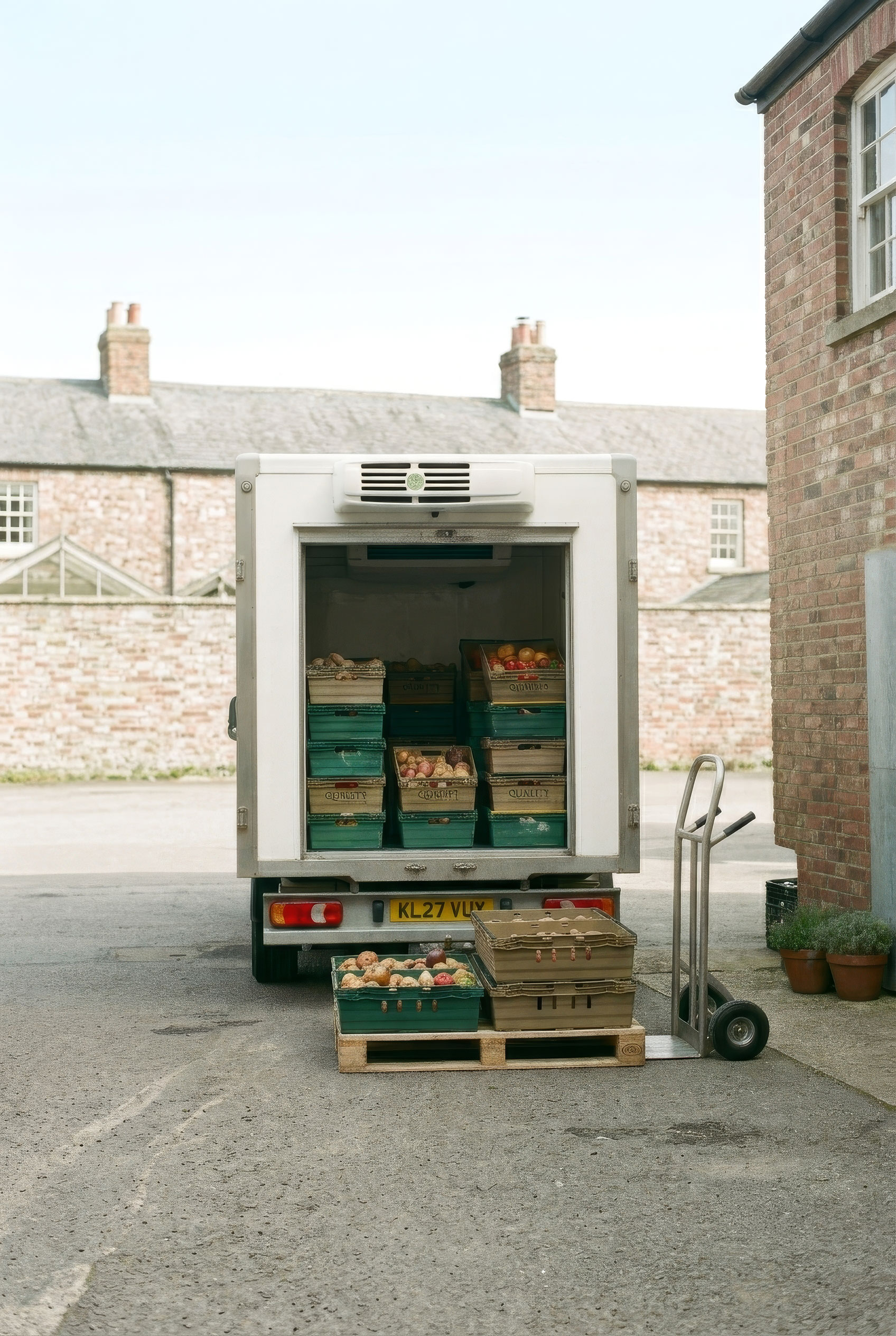


A key requirement for Deliveroo in this project was to validate the concept of a digital sourcing platform for restaurants, as opposed to the traditional method of placing orders via telephone or pen and paper.
To explore this concept thoroughly, we conducted in-depth, hands-on research with actual restaurants and suppliers.
Our in-house user research team led comprehensive field studies and conducted interviews with both restaurants and suppliers throughout the duration of the project. This extensive research allowed us to gather valuable insights, ensuring the platform would address real-world needs and provide a seamless digital alternative to the traditional ordering process.

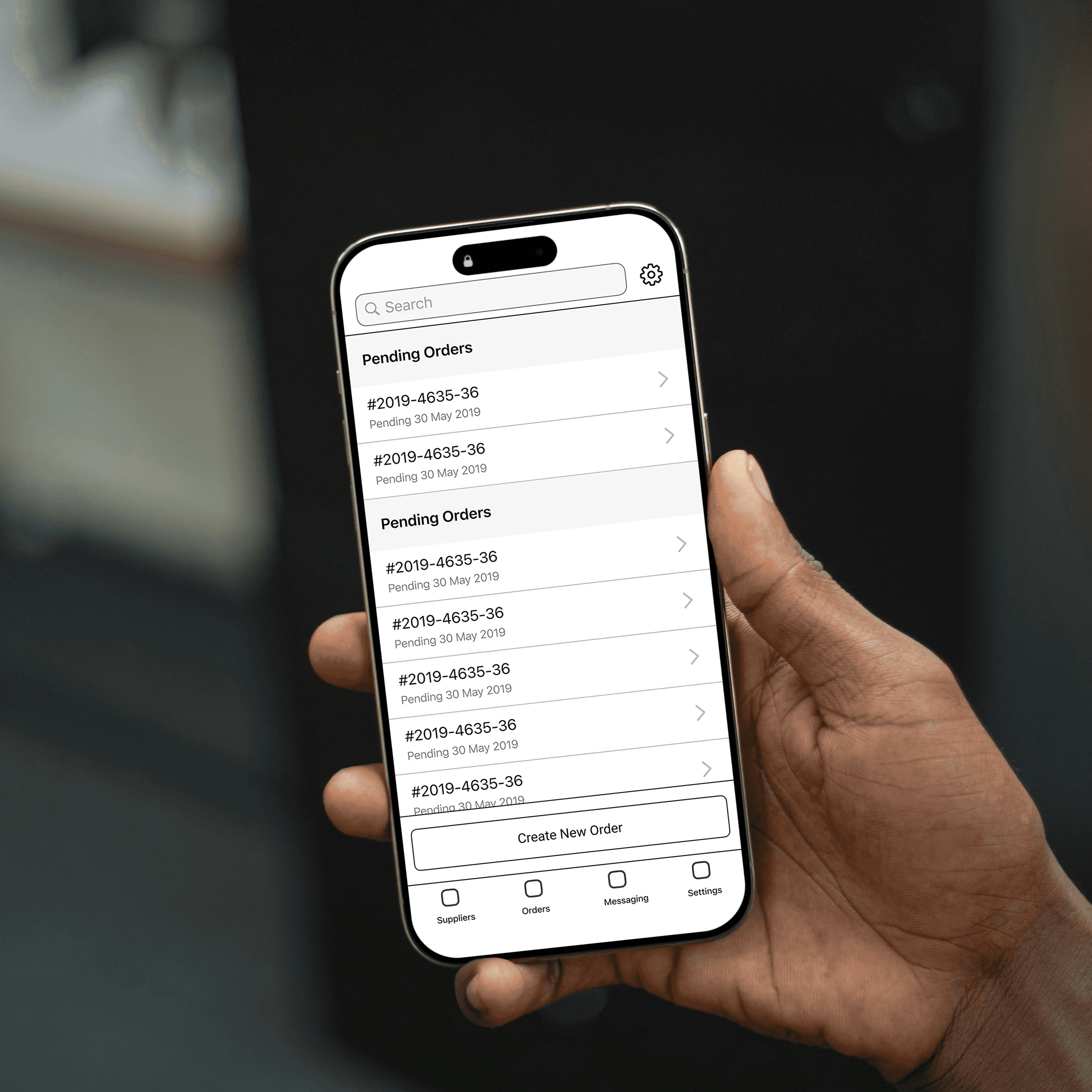
Throughout the process we found the need to pivot and react to research findings.
When we launched the first version and the app was in the hands of real users, we learned more about their behaviors and expectations.
The main challenges we encountered were as follows:
Users mistakenly downloaded Sourced, assuming it was the consumer facing app.
Restaurants found adding their own suppliers and items tiresome and laborious.
Introducing the concept of adding new suppliers for restaurants as they only wanted to deal with existing relationships.

To remove the burden we decided a potential solution was to develop a concierge web service (seen above) whereby users could request an account and a member of the deliveroo team would onboard them.
This meant restaurants would have their app tailored to them with their suppliers and products already loaded to their account, whilst weeding out customers looking for a takeaway and point them in the right direction towards the consumer app.
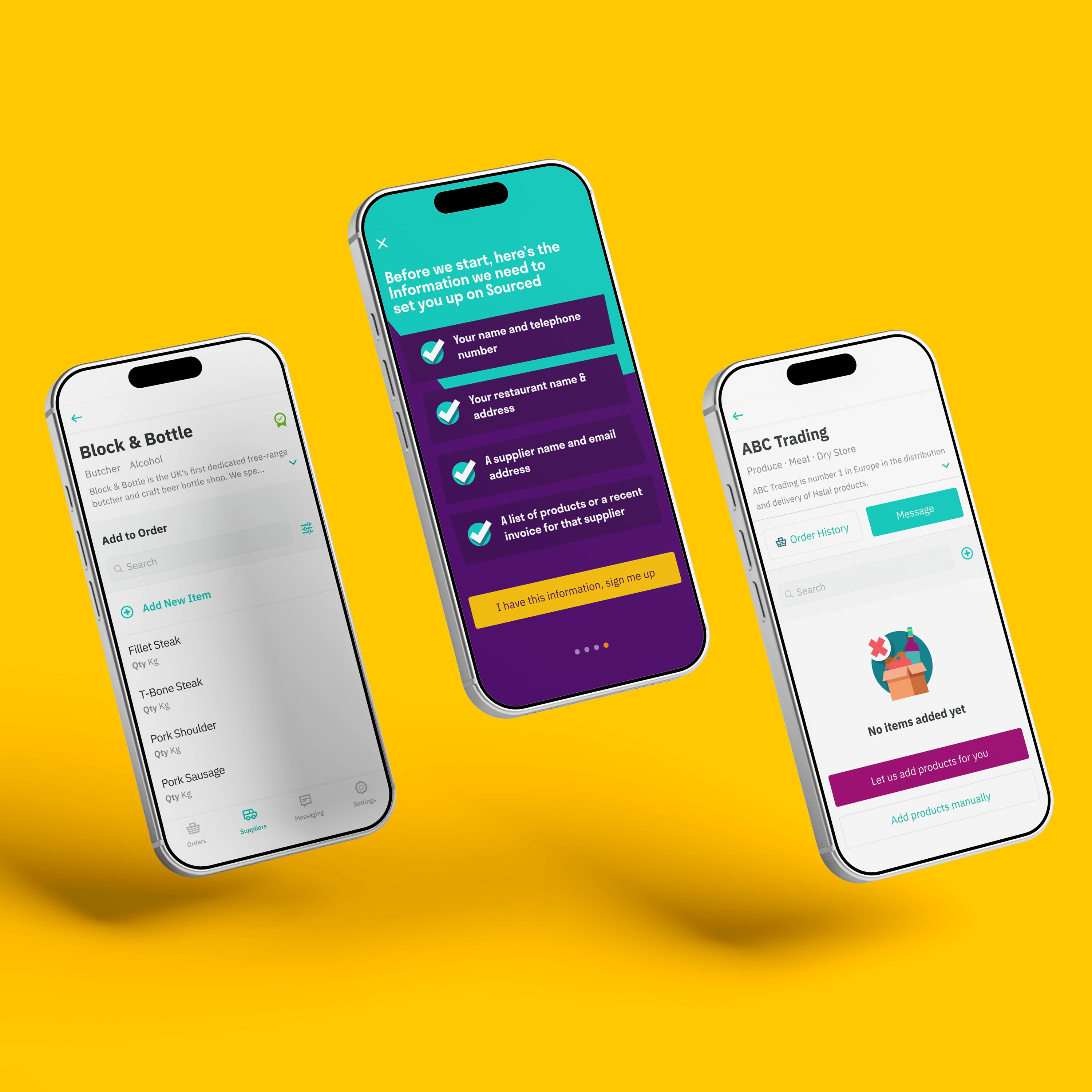


Sourced needed a distinct identity that still felt part of the Deliveroo brand. Inspired by the Deliveroo wordmark, the logo uses two linked “O”s to represent the connection between restaurants and suppliers. I also created motion graphics and a launch video shown at Deliveroo’s annual restaurant awards.
The Hard Parts
The decisions, constraints and trade-offs behind the final experience.
01
We had to digitise an established behaviour
Change without disruption
Restaurants already had trusted supplier relationships and familiar ways of ordering by phone, message or pen and paper. The challenge wasn’t simply moving that process into an app, but making digital ordering feel easier without forcing users to change the relationships and routines they already relied on.
02
We tested the risky parts before polishing them
Learning before investing
Rather than jumping into high-fidelity design, I used simple prototypes and familiar iOS components to test the core journeys early. This let us challenge assumptions quickly, learn directly from restaurants and suppliers, and refine the product before committing time to the full build.
03
Launch exposed a problem we hadn’t solved
Responding to real behaviour
Once the product reached real users, we discovered that asking restaurants to manually add their suppliers and products created too much friction. Instead of defending the original onboarding experience, we treated that behaviour as evidence that the model itself needed to change.
04
The better solution wasn’t purely digital
Designing the service, not just the UI
We introduced a concierge service that allowed Deliveroo to set up suppliers and products on a restaurant’s behalf, while retaining self-service for users who preferred it. The result was a hybrid onboarding model shaped around different levels of confidence and effort rather than forcing everyone through the same journey.
Outcome
01
Digitised ordering process so restaurants can easily and collaboratively manage stock.
02
Generated significant savings for restaurants via the Deliveroo platform.
03
Connected restaurants directly to their supplier via instant messaging.